Written by
Nacho Seoane
Published on
Share
Choose local AI when a task needs to run in an environment you control and can maintain; consider cloud AI when the service meets your data, quality and operational requirements. Test both options on the same work before buying equipment or commissioning an integration.
Start with a task: searching a catalogue, classifying enquiries or preparing a draft. “Having private AI” leaves too many questions unanswered. This guide proposes a data map and a trial worksheet to turn that intention into a brief you can verify.
TL;DR — Before choosing where AI runs
- Define a task and an acceptable result. Comparing different demonstrations does not support a fair decision.
- Identify where the model runs. An installed application can connect to an external service.
- Review the complete data journey. Include documents, tools, logs and backups.
- Test quality and simultaneous demand. One successful example does not establish capacity for a team.
- Compare the cost of completed work. Include review, infrastructure, usage and maintenance.
- Assign operational ownership. Request owners for incidents, changes and recovery.
- Decide using requirements and evidence. A faster answer cannot compensate for a failed mandatory requirement.
What does running AI locally actually mean?
Local describes where the model performs its calculations; it does not explain the whole assistant. Separate the interface, the model generating answers, document retrieval and tools acting on other systems.
Ollama, for example, supports cloud-hosted models through its application, command line and local API. Seeing an application on your computer therefore does not establish that inference happens there. Ollama Cloud documentation.
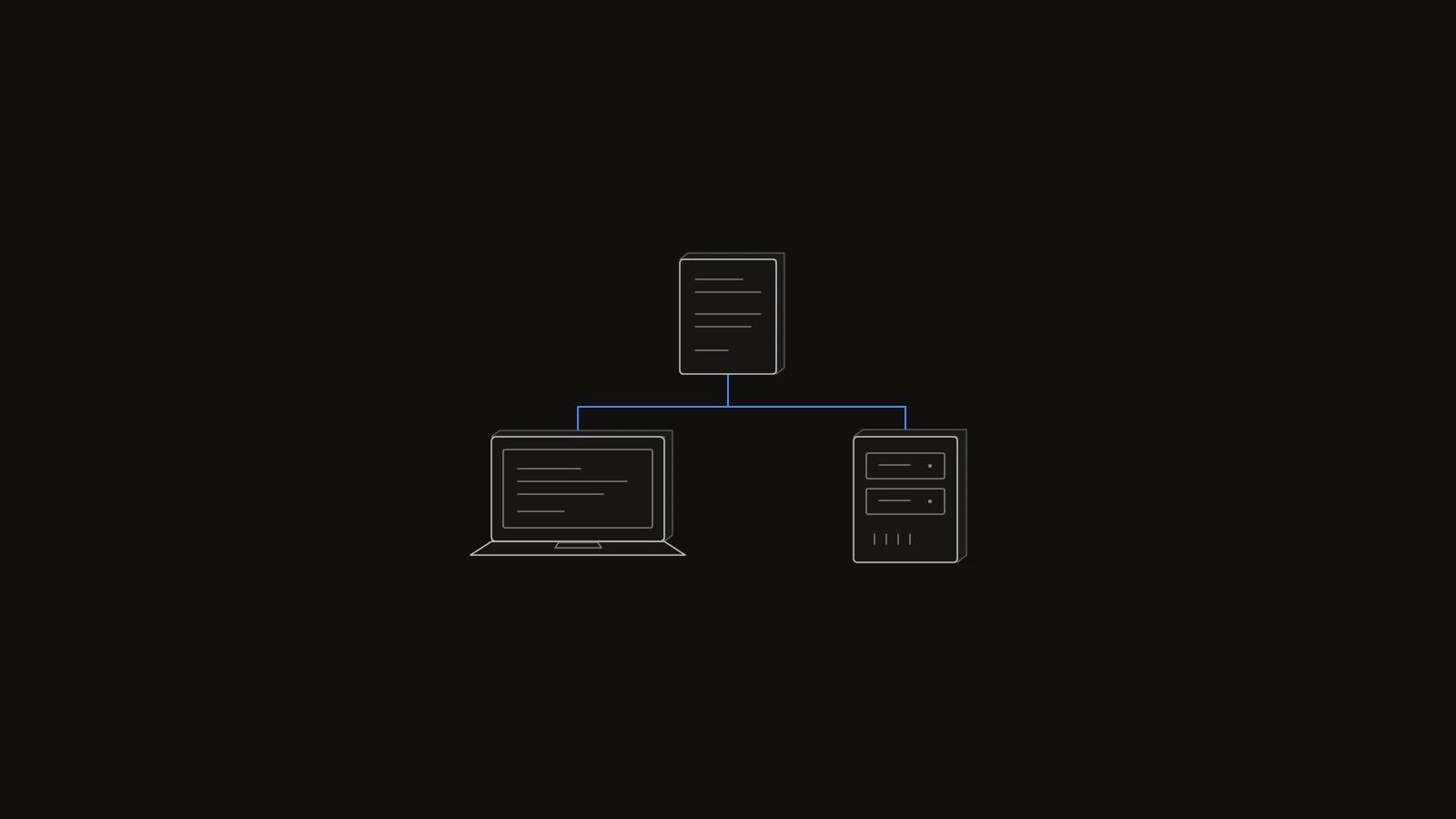
Request a diagram with specific locations: the user's laptop, an office server, rented infrastructure or a provider API. A server you administer in an external data centre is not inside your office, even if you control its configuration. Name that deployment instead of simply calling it “local”.
How can you compare options without mixing requirements?
Compare the same task and separate location, administration and access. The table below is an Apogeo briefing proposal, not a universal ranking of security or performance.
| Option | When a trial makes sense | What to request | What could rule it out |
|---|---|---|---|
| Model on the user's device | Bounded work on that device with an offline requirement | Model and version, test equipment, dependencies and disconnected trial | Insufficient capacity or data leaving through another tool |
| Model on a server your team manages | Shared use with infrastructure control and operational staff | Location, access, concurrent load, maintenance and recovery | No responsible owner or inadequate continuity |
| Managed API or service | You want the provider to operate the model and can accept its conditions | Data flow, limits, service terms and task trial | Data requirements or capabilities the service cannot meet |
| Combined environments | Tasks or data have different requirements | Explicit routing rule, destination and behaviour when an option fails | Unauthorised transfers or excessive operational complexity |
“Cloud” does not define a single access arrangement either. Hugging Face documents internet-accessible endpoints secured with tokens and private endpoints using PrivateLink. A private connection does not establish that any particular configuration meets your requirements. Inference Endpoints security.
Which data can leave even when the model is local?
Trace every step that receives, transforms, stores or sends information. Include initial file reading, conversion, document indexing, the model request, subsequent actions and troubleshooting logs.
For each step, ask what data it receives, where processing happens, who has access, how long information is retained and which external connection it uses. An assistant can generate text locally and then send it to a third-party CRM. That integration belongs on the map, including when it is intentional.
LM Studio documents offline operation for downloaded models, document chat and local inference serving. Finding or downloading models and updating components require connectivity. This describes those functions; added integrations need separate verification. LM Studio offline operation.
For an offline trial, prepare equipment and files first, then reproduce the complete journey in a test environment. Record what continues working, what stops and what the user is told. If external transfers must be prevented, also request technical review of connections and controls; a disconnected demonstration does not establish behaviour in every system state.
What should you test before buying hardware or accepting a proposal?
Request task results from the configuration you intend to use. Record model and version, equipment or service, document length, instructions, concurrent users and acceptance criteria. If both model and hosting change, you are comparing complete solutions rather than isolating the effect of location.
An illustrative initial trial could contain 30 cases: 20 routine requests, 5 with long documents and 5 with insufficient information. This is not a sample size that guarantees reliability. Adjust coverage and repetition to the risk and variety of the work. Unanswerable cases should test whether the assistant recognises missing evidence.
Use the same cases across alternatives and retain failures. Measure result acceptance, time to finish the task, human review and errors. Separate model startup from operation after loading. Repeat with expected simultaneous demand and observe queues and rejected requests.
Ollama's local FAQ explains how available memory, context and parallel requests affect concurrency. It also documents disabling its cloud features. Verify these properties in the chosen configuration; they are not a capacity promise or a control over every connection on the computer. Ollama local FAQ.
Our AI pilot evaluation guide helps define who accepts results and when tests should be repeated.
How should cost and maintenance be compared?
Compare equivalent periods and service levels, including all the work required to operate each option. Request prices for your expected workload. This guide does not set market prices or a universal volume at which buying a server becomes economical.
A comparison sheet can separate implementation; equipment, hosting and energy; model usage; storage and connected tools; operations, updates and incidents; and review or correction time. Distinguish initial spending from recurring costs and explain how shared equipment is allocated between uses.
When comparable data is available, calculate:
Cost per accepted task during the period =
Attributable costs during that period / completed, accepted tasks

Record separately:
Initial investment and allocation method
Pending, failed and repeated tasks
Human review time
Available capacity and constraints
The numerator should include failed-attempt costs even though the denominator counts only accepted results. An option that leaves difficult tasks unresolved needs explanation; its figure is not automatically comparable. The AI agent cost guide explains cost categories, while the savings measurement guide helps account for human effort.
Supplier comparison worksheet
Complete this worksheet for the options you are actually considering. It is an Apogeo resource for commissioning a trial, not a performance report on the products mentioned.
DECISION: LOCAL AI OR CLOUD SERVICE
Task and business owner:
Acceptable outcome and disqualifying errors:
Expected users, volume and simultaneous demand:

MANDATORY REQUIREMENTS
Permitted data and authorised destinations:
Required offline operation:
Agreed access, retention and deletion:
Availability and response to interruptions:

FOR EACH OPTION
Model, version and configuration:
Equipment or service; location and owner:
Map: input → documents → model → tools → logs
External dependencies and fallback options:
Test sample, results and retained failures:
Task time, human review, queues and rejections:
Initial and recurring costs; calculation assumptions:
Owner for updates, support and recovery:
Licences and conditions still to verify:

DECISION
Requirements met / failed / lacking evidence:
Selected option and reason:
Outstanding test and responsible person:
Changes that require a fresh evaluation:
For example, a team drafting from a catalogue could test a model on its server against a managed API, using authorised material. If sending that material externally were prohibited, the API would be excluded from that workflow before comparing speed. This is a fictional example, not an Apogeo client or result.
Final recommendation
Commission a small comparison on your own task first and postpone infrastructure purchases until results are available. Require a data map, a reproducible trial and an operational owner. Choose among options meeting mandatory requirements and state what remains unproven.
If you are planning a business assistant, bring this worksheet to our AI agents service. We can start with the process you want to improve and define what needs checking before selecting an implementation.
Frequently asked questions
These answers clarify the decision's scope; each proposal must specify its own conditions.
Does installing Ollama or LM Studio mean everything stays on my device?
Verify the selected model and the complete journey. Check where it runs, which tools it uses and where information is stored. An installed interface alone does not establish that there are no external calls. Request evidence from the delivered configuration, including fallback options when the primary service fails.
What computer do I need for local AI?
Request a trial with the intended model, documents and workload before buying equipment. A memory recommendation without that context can undersize or oversize the machine. The proposal should identify the tested configuration and explain what happens when several people work at once, including requests the system cannot handle immediately.
Is local AI cheaper?
That conclusion requires a verified workload and costs. Include equipment, operations, incidents, review and connected tools alongside usage charges. Compare the same period and quality level. Running a model on an available computer can support an initial trial without yet justifying a shared deployment for the business.
Can it work without internet access?
Only if the whole required journey works without external services. Check files, retrieval, the model, authentication and the result's destination. Downloading a model in advance does not itself make a remote CRM available during a connection failure. Define which tasks remain available and what users see when another component is unavailable.
What happens when the local model cannot complete a task?
Define an explicit outcome: human review, postponement or a previously authorised destination. Automatic cloud fallback can change the data journey. Document when it activates, what it sends and how it is recorded. If external processing is not permitted, that boundary must remain in force when something fails.
Can we change approach later?
Keeping your data, configuration and acceptance tests makes a later change easier. Request export formats, integration documentation and exit responsibilities. Switching models or hosting can affect results and operations. Repeat relevant tests and review licences and conditions before accepting the change; retaining an interface does not establish equivalent behaviour underneath.
In summary
- Decide by task. Define the result the business needs first.
- Name the deployment. Distinguish devices, managed servers and external services.
- Map the data. Include connections and storage beyond the model.
- Verify performance. Retain errors and test expected demand.
- Count operations. Compare attributable costs and review work.
- Assign owners. Agree maintenance, changes and recovery responsibilities.
- Buy with evidence. Resolve outstanding requirements before expanding.
Sources
Primary documentation checked on 25 November 2026. The matrix, 30-case trial and worksheet are Apogeo proposals, not benchmarks, privacy guarantees or commercial results.